


History
Rooted in History.
Grounded in Faith.
For nearly three centuries, St. Paul’s has been a place of worship, welcome, and service in the heart of Newburyport. Our history shapes who we are, and our faith guides us into the future.

St. Paul’s Episcopal Church: the oldest continuous Episcopal Church in Massachusetts
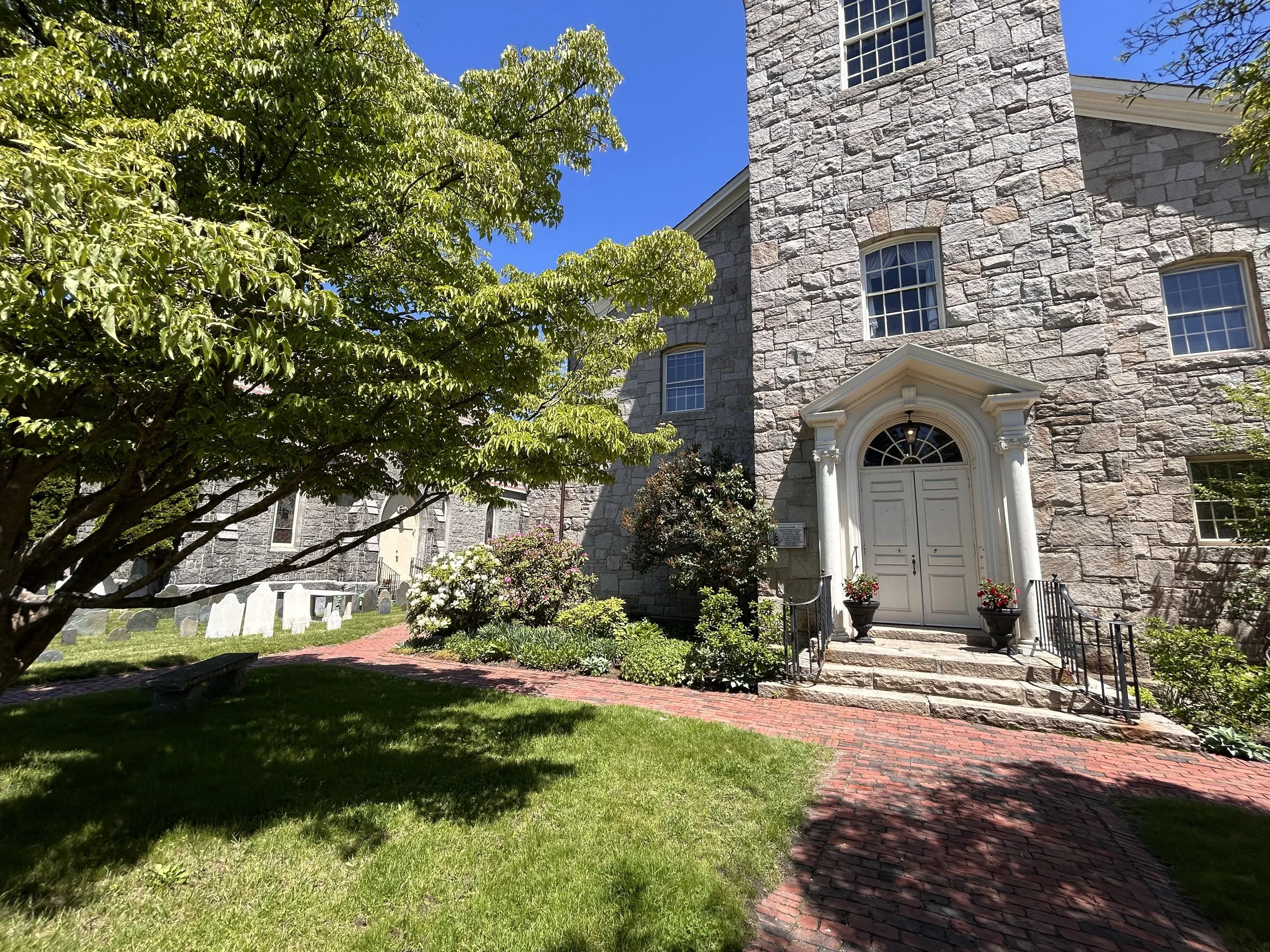
Founded in 1711 as a mission parish of the Anglican Church in British America during the reign of Queen Anne, St. Paul’s is the oldest continuous Episcopal Parish in Massachusetts and one of the oldest in America. The current building is the fourth, the third on this site at 166 High Street.
In 2011 St. Paul’s celebrated its 300th anniversary as a parish.

1711
Queen Anne’s Chapel
Where Our Story Began
The first Queen Anne’s Chapel was built in 1711 on the “Plains,” where Belleville Cemetery is located today. By 1712, the Rev. John Lambton reported that more than 200 people were worshipping there regularly. A Memorial Cross now marks the chapel’s original location.
As Newbury’s seafaring community grew, more residents settled near the waterfront and sought a church closer to the “Waterside.” Land on High Street was purchased in 1738, and in 1741 the congregation organized as St. Paul’s Church.
This church would later witness an important moment in American history when, following a service in July 1776, the Declaration of Independence was read to the congregation by church clerk Tristram Dalton, who later became Massachusetts’ first U.S. Senator.
Queen Anne’s Chapel eventually fell out of use and, after years of deterioration, was destroyed in a storm in 1776.
1753–1803
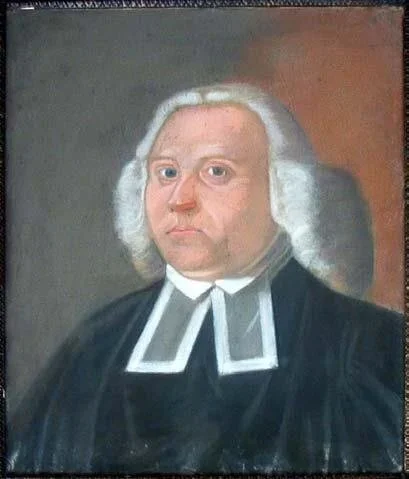
The Rt. Rev. Edward Bass
Leadership Through Revolution
The Rt. Rev. Edward Bass served as rector of St. Paul’s from 1753 to 1803, guiding the parish through the turbulent years of the American Revolution.
St. Paul’s and Trinity Church in Boston were the only two Anglican churches in Massachusetts to remain continuously in operation throughout the Revolution. To help preserve the congregation, Bass agreed to omit prayers for the King, Royal Family, and British government from worship.
Bass later became the first Bishop of Massachusetts. Today, the bishop’s miter atop St. Paul’s steeple commemorates the church’s important place in the history of the Episcopal Church in Massachusetts.
The 1800 Church
A New Church for a Growing Parish
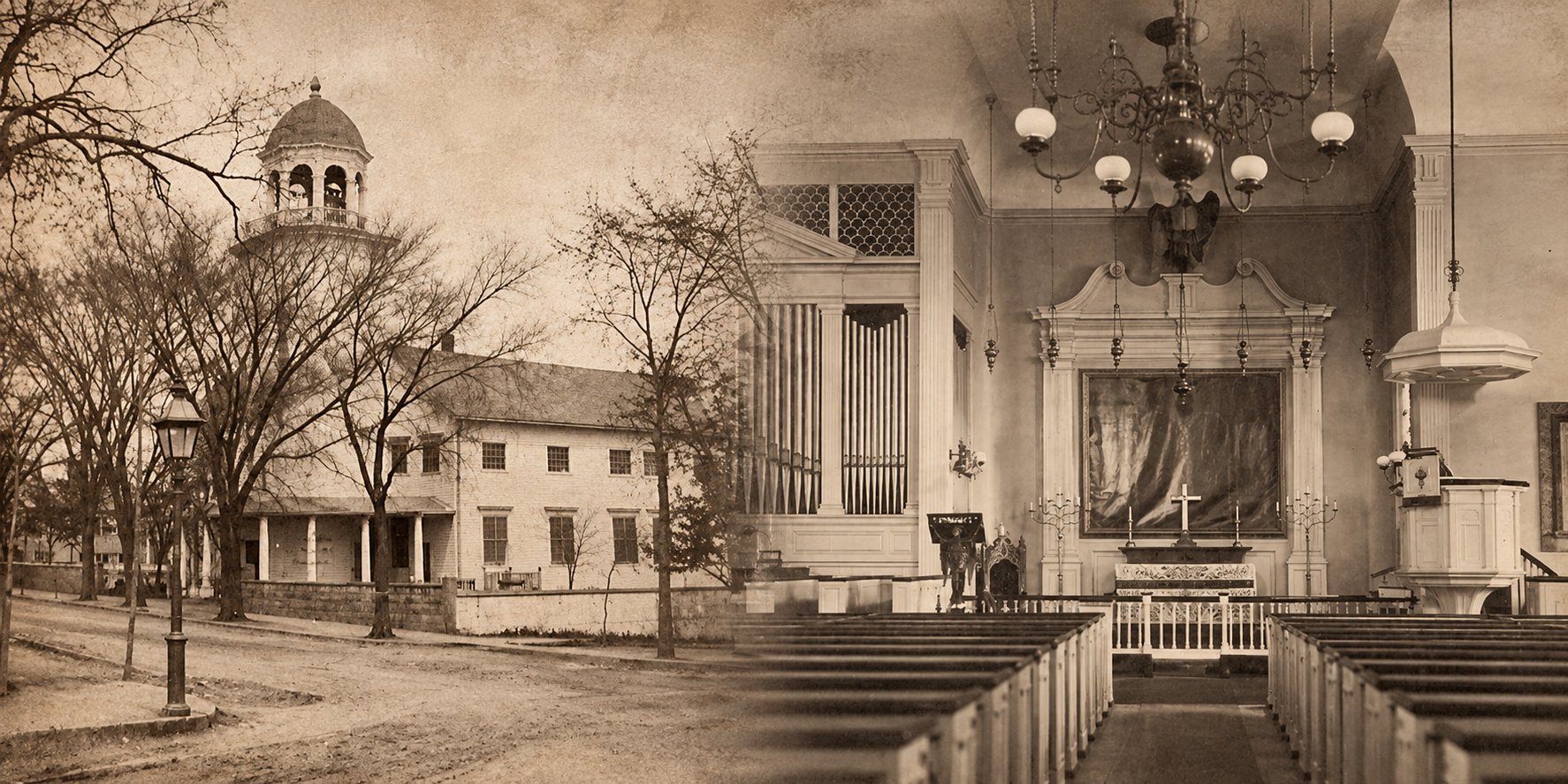
In 1800 the old St. Paul’s Church was torn down and a new building was erected. This new building, the second on the site, was a wooden structure built in the Italianate style with a porch spanning the front. It was consecrated on October 8, 1800.
The interior of the new church building had closed pew boxes and a balcony that spanned across the back and wrapped around both sides of the sanctuary. The pew boxes were purchased (and sold) by families, the most expensive being near the pulpit, and passed down through the generations. In this way the church regrettably contributed to the inequality of its time and acted contrary to the life and teachings of Christ, with the balcony and a few pews at the back reserved for poor families, widows, itinerants, and African Americans. The building, known as the 1800 Church, remained essentially the same until April of 1920 when it was destroyed by fire.
St. Anna’s Chapel
A Historic Treasure
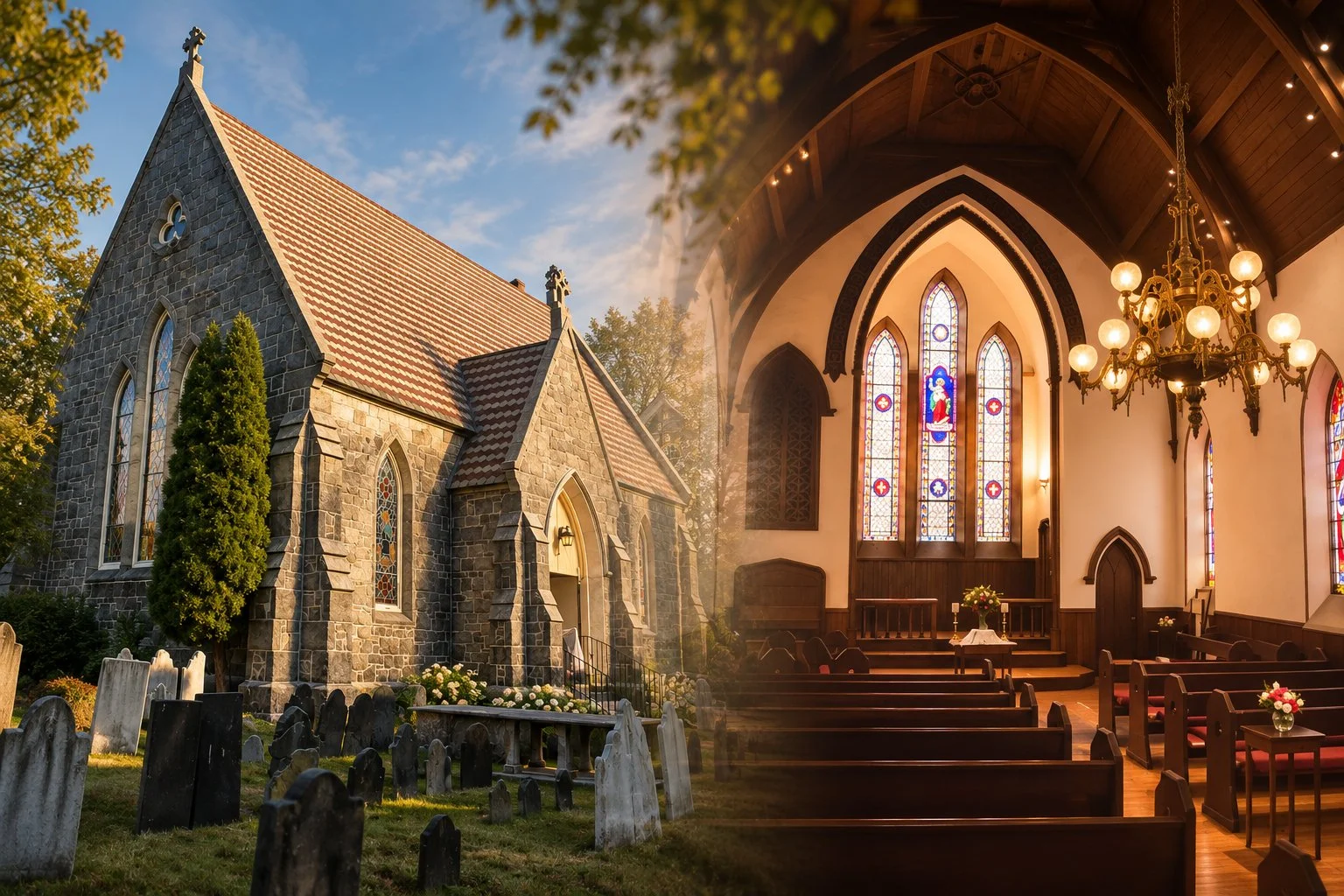
Built between 1862 and 1863, St. Anna’s Chapel was given to the parish by the Rev. William Horton and named in memory of his daughter, Anna Marie Horton.
Constructed of Rockport granite in the High Gothic style, the chapel remains remarkably unchanged.
Its 10 stained-glass windows by Henry Sharp Studios of New York City are believed to be among the earliest stained glass in the Boston area. St. Anna’s contains the only known complete collection of Sharp windows.
The chapel also houses an original 1862 William Stevens hand-pumped organ and its original Gothic Revival lighting fixtures, which were converted from gas to electricity.
1922–1923
The Church Today
Rebuilt With History in Mind
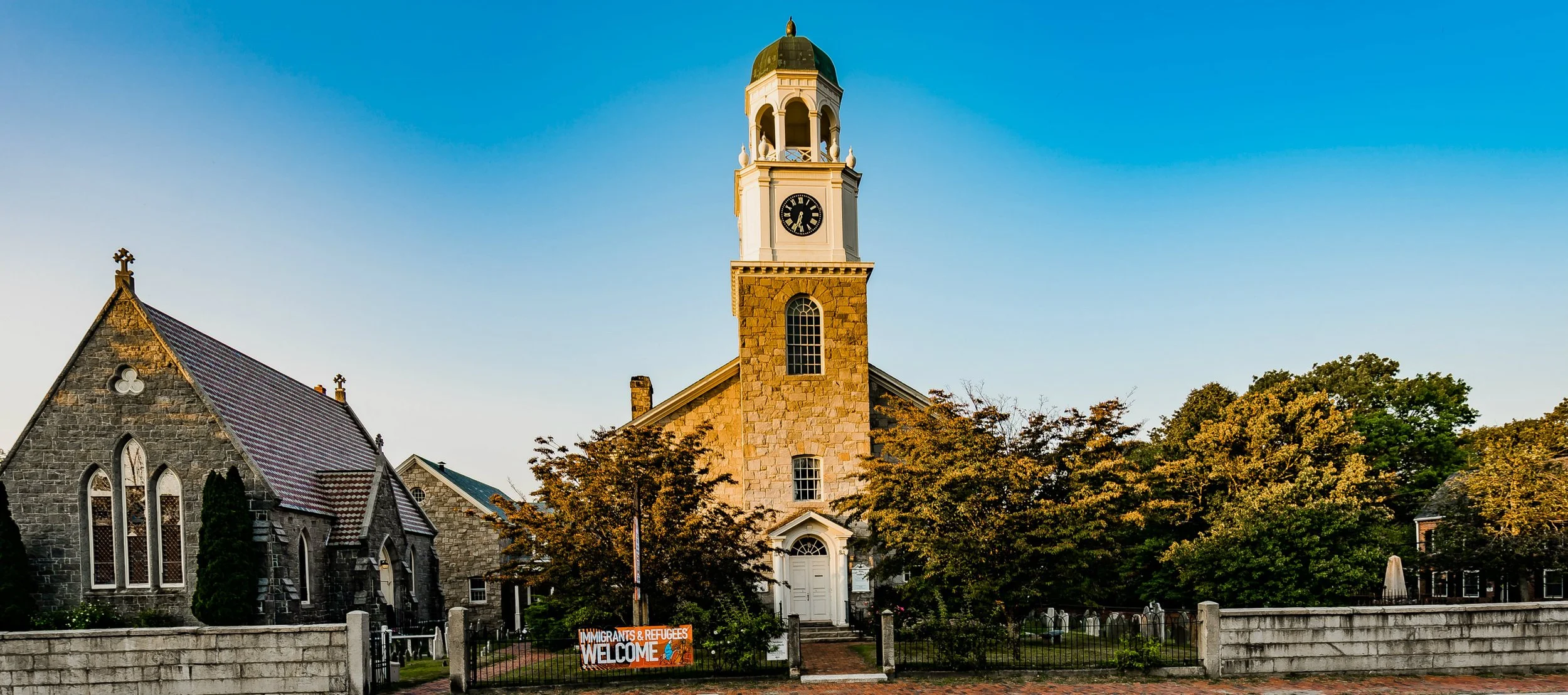
After the devastating 1920 fire, the cornerstone of the present church was laid on August 17, 1922, and the new church was dedicated on November 27, 1923.
Architect William Graves Perry, a Newburyport native who later became chief historic architect of Colonial Williamsburg, designed the building.
Perry used Rockport granite to complement St. Anna’s Chapel while preserving many elements of the earlier church. Inside, the light-filled sanctuary reflects the character of early American churches with its enclosed pews, wall tablets, wine-glass pulpit, and traditional reredos.
PIECES OF OUR PAST
Historic Artifacts at St. Paul’s
In the entryway and Narthex (entrance hall) of the church there are a few treasured relics from the past. The weathervane over the entrance to the Narthex is the original weathervane from the 1711 Queen Anne’s Chapel. After directing the wind for many generations on a barn in Newbury after the collapse of the Chapel, it was donated to the church by a local family. The wood carved Bishop’s Miter saved from the top of the 1800 Church after the fire resides on a table in the entryway.
On the left of the entryway is the Paul Revere Bell which hung in the steeple of the 1800 Church and called parishioners to worship from 1811-1899. It was removed after developing cracks. The bell cast in 1809 is one of 23 known to exist from the period of Revere’s personal oversight of the foundry in the North End of Boston.
On the right wall of the Narthex is an original pew purchase document from March 27, 1801 with short biographies of the men involved in the sale and transfer. On the left wall is a painted reverse glass list of St. Paul rectors from 1711 to the present day.
In the Sanctuary are various stone plaques memorializing prominent members of the parish throughout its history set into the walls. At the altar, past Perry’s prominent wine glass pulpit with sounding board, is a recreated version of the original reredos lost in the fire of 1920.
The Labyrinth
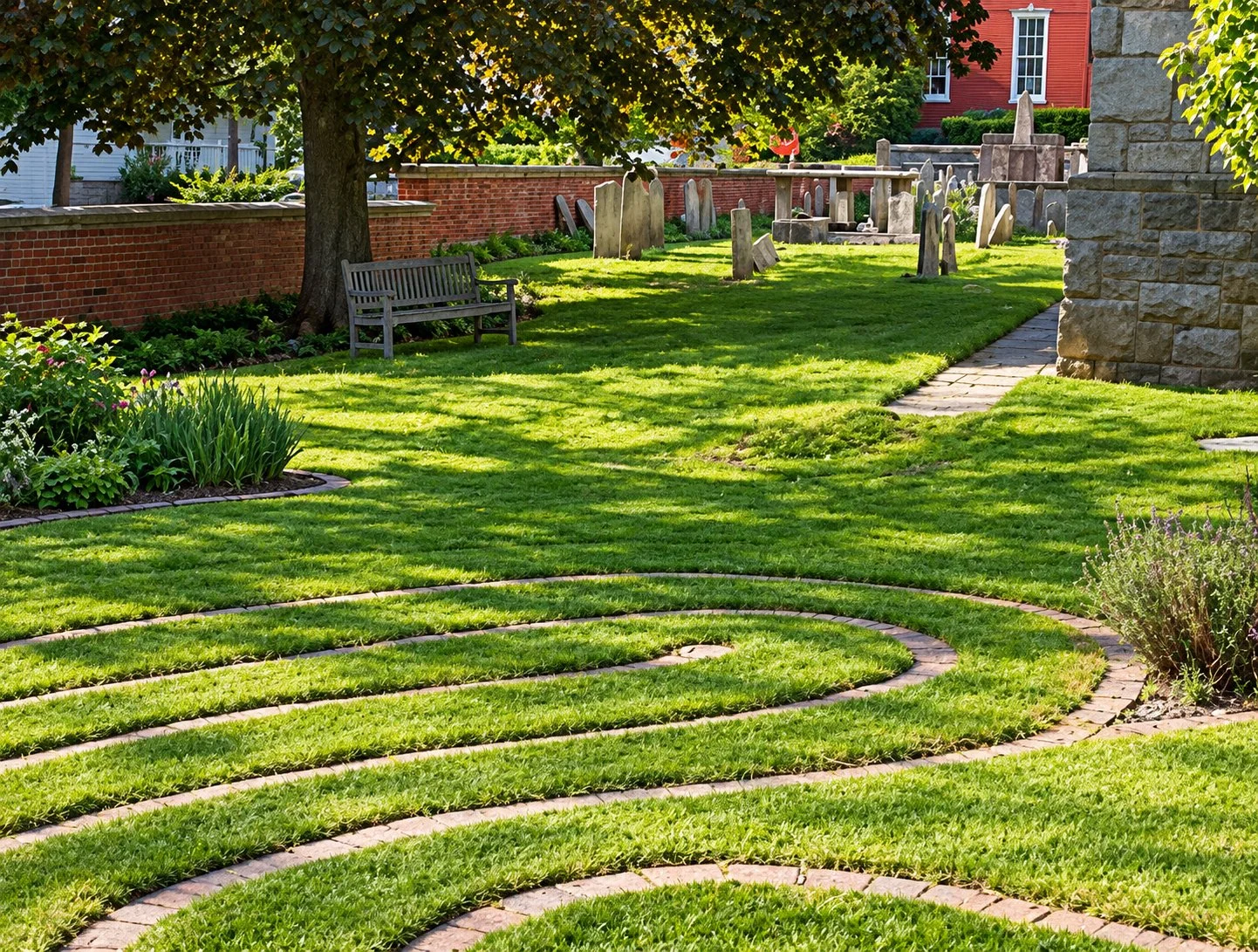
Behind the church, a brick labyrinth offers a quiet place for prayer, reflection, and contemplation. Dedicated to the Rev. Roger Cramer, who retired in 2005 after 26 years as rector, the labyrinth draws upon an ancient Christian tradition. Walking its winding path provides an opportunity to slow down, quiet the mind, and create space for prayer.